Melankolis: A Thoughtful Script Font for Natural, Romantic Design
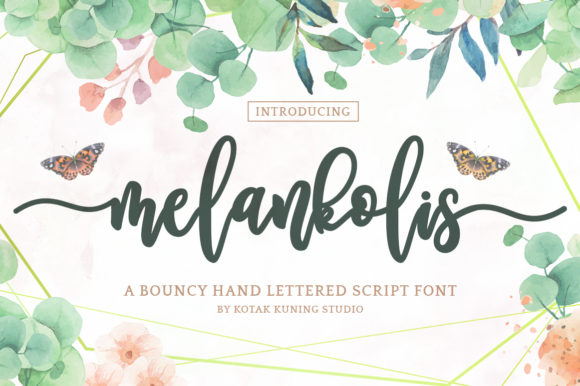
Melankolis stands out in the crowded landscape of script fonts—not through flash or novelty, but through quiet intention. It’s a hand-crafted script typeface with organic flow, subtle variation in stroke weight, and gentle, humanistic curves. Unlike many decorative scripts that prioritize flair over function, Melankolis balances expressiveness with legibility, making it viable beyond one-off logos or social media graphics. Its design feels considered: letters connect with natural ease, spacing avoids tightness or awkward gaps, and baseline rhythm remains consistent without sacrificing warmth.
What Makes Melankolis Distinctive—Beyond Aesthetics
At its core, Melankolis is built for authenticity—not perfection. You’ll notice slight irregularities in terminal endings, modest contrast between thick and thin strokes, and letterforms that breathe rather than compress. These aren’t flaws; they’re cues that signal handmade craft. That quality translates well in contexts where audiences respond to sincerity over polish—think artisanal product packaging, wedding stationery, small-batch skincare labels, or personal brand assets for coaches and creatives.
Its x-height sits comfortably mid-range, supporting readability at moderate sizes (14–24 pt), especially in body copy for invitations or short editorial features. Uppercase letters carry presence without dominance, while lowercase forms maintain cohesion across words—critical when setting longer phrases like “hand-poured soy candles” or “slow-stitched leather journals.”
Practical Use Cases and Real-World Performance
In actual use, Melankolis excels where tone matters as much as text. For example, a local ceramics studio used it across their Instagram carousel posts, website hero banner, and product tags. The font reinforced their messaging around craftsmanship and mindfulness—without requiring additional visual explanation. Similarly, an educator launching a self-paced course on mindful journaling chose Melankolis for her course title and module headers. Students reported the typography felt “inviting, not intimidating”—a subtle but meaningful cue about the learning experience ahead.
It performs reliably in both digital and print environments. Kerning pairs are well-adjusted, reducing manual tweaking in tools like Adobe Illustrator or Figma. OpenType features include standard ligatures and contextual alternates—enough to add nuance without overwhelming users unfamiliar with advanced typographic controls. Importantly, it renders cleanly on screens, including mobile devices, with no pixelation or inconsistent hinting issues observed across browsers or operating systems.
Integration Within Creative Workflows
Melankolis doesn’t demand special setup. It installs like any desktop font (OTF format) and works natively in mainstream design applications—Photoshop, InDesign, Canva Pro, Affinity Designer, and even newer web-based tools like Penpot and Photopea. No licensing hurdles or cloud dependencies complicate access. Files load quickly, and file size remains lightweight (~120 KB), avoiding slowdowns in collaborative projects with multiple assets.
One practical note: because of its organic nature, Melankolis benefits from thoughtful pairing. It works best alongside clean, neutral sans-serifs (e.g., Inter, Poppins, or Montserrat) or low-contrast serifs (e.g., Lora or Cormorant Garamond). Avoid pairing it with other high-contrast scripts or overly geometric typefaces—those combinations tend to compete rather than complement.
Limited Situations Where Caution Is Advised
While versatile, Melankolis isn’t universal. It’s not ideal for dense UI text, legal disclaimers, data-heavy dashboards, or signage requiring long-distance legibility. Its charm lies in moderation—not volume. Using it for full paragraphs of body copy in a blog post or lengthy email newsletter may reduce scanability and increase cognitive load. Likewise, brands targeting highly technical or corporate audiences—say, enterprise SaaS platforms or financial compliance firms—may find its romantic sensibility misaligned with audience expectations.
Also worth noting: Melankolis includes Latin characters only (no extended Cyrillic, Greek, or Vietnamese support). Projects requiring multilingual content will need supplemental fonts or fallback strategies.
Audience Fit: Who Benefits Most—and Why
The professionals who gain the most from Melankolis tend to share two traits: they value narrative cohesion in their visual language, and they work with audiences that respond to emotional resonance. Small business owners selling handmade goods, freelance designers building boutique brand identities, educators developing wellness or creative courses, and bloggers focused on lifestyle, sustainability, or slow living often find Melankolis fits naturally into their toolkit.
It also serves well in instructional or craft-oriented contexts—such as the CF Class: How to Create Epoxy Resin Tumblers, where Melankolis appears in project templates, certificate designs, and promotional materials. In that setting, its organic texture mirrors the tactile, process-driven nature of resin work—reinforcing theme and medium simultaneously.
Long-Term Value and Consistency Over Time
Fonts age differently. Some feel dated within months; others settle into timelessness through restraint and clarity of purpose. Melankolis leans toward the latter. Its avoidance of trendy embellishments—no excessive swashes, no forced distressing, no exaggerated flourishes—means it won’t require rebranding every 18 months to stay current. Designers report using it across multiple client projects over two years without fatigue or repetition concerns.
That consistency extends to licensing. As part of a curated collection like the CF Class bundle, Melankolis comes with a clear, perpetual license for commercial use—including resale items like printable planners or physical goods such as tumblers or greeting cards. No subscription fees, no usage caps, no renewal prompts. This predictability supports sustainable workflow planning, especially for freelancers juggling multiple income streams.
Final Considerations Before You Choose
If your goal is to convey warmth, care, and intentionality—without leaning into cliché or nostalgia—Melankolis offers a grounded, reliable option. It’s not flashy, but it’s memorable. Not experimental, but it carries character. Not minimalist, but it respects space and silence.
Before adopting it broadly, test it in your intended context: set a real headline, apply it to a mock product label, paste it into your email template preview. See how it holds up next to photography or illustrations you actually use. Does it elevate—or does it distract? Does it feel like an extension of your voice, or a costume?
For those already enrolled in or exploring the CF Class: How to Create Epoxy Resin Tumblers, Melankolis isn’t just included—it’s purposefully integrated. Its texture complements the glossy, fluid surfaces of resin work, and its readability supports clear instruction without undermining aesthetic cohesion. That kind of alignment—between tool, technique, and outcome—is rare, and worth recognizing.