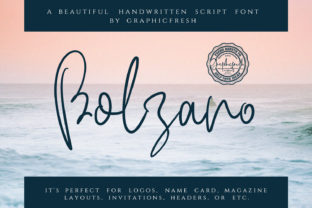
Johnson Rock: A Handwritten Font That Adds Personality Without Compromising Practicality
When you need type that feels human—not robotic, not sterile, but warmly intentional—Johnson Rock stands out. It’s not just another handwritten font. It’s a carefully crafted balance of spontaneity and structure: quick-dry strokes that mimic the natural flow of ink on paper, subtle inconsistencies that suggest authenticity, and a signature rhythm that gives every word a quiet confidence. Designed for real-world use—not just mood boards—Johnson Rock delivers personal charm without sacrificing clarity or versatility.
Why People Reach for Handwritten Fonts (and Why Many End Up Disappointed)
Adults across creative, entrepreneurial, and professional roles often turn to handwritten fonts seeking something specific: warmth in digital communication, distinction in branding, or emotional resonance in storytelling. But common frustrations quickly surface. Some fonts feel too childish or overly decorative—unsuitable for business cards or client-facing materials. Others lack sufficient character sets, missing essential punctuation, numerals, or language support. And many simply don’t scale well: what looks charming at 48pt becomes illegible at 14pt in body text or email headers.
That’s where Johnson Rock bridges the gap. It was built with intention—not just aesthetic appeal, but functional resilience. Its stroke contrast is gentle, not extreme. Its letterforms retain legibility even in tight spaces or lower-resolution displays. And because it avoids exaggerated flourishes, it works equally well for a heartfelt wedding invitation and a boutique skincare brand’s product label.
Real Situations Where Johnson Rock Makes a Measurable Difference
Consider these everyday scenarios—and how Johnson Rock helps solve them:
- A small business owner launching a new service: You want your website and social bios to feel approachable—but not unprofessional. Johnson Rock used sparingly in headings or call-to-action buttons adds humanity without undermining credibility. Try pairing it with a clean sans-serif like Inter or Lato for balanced visual hierarchy.
- A freelance designer building a portfolio: Clients notice consistency and intentionality. Using Johnson Rock as a signature accent—say, in project titles or testimonial quotes—creates a memorable throughline across case studies, without overwhelming the work itself.
- An educator creating handouts or classroom posters: Students respond better to materials that feel personally crafted. Johnson Rock’s natural rhythm supports readability while signaling care and attention—especially effective for motivational quotes, learning objectives, or reflection prompts.
- A nonprofit crafting donor communications: Trust grows when tone feels genuine. A short handwritten-style headline in Johnson Rock, paired with clear body copy, can soften formal language and reinforce mission-driven sincerity—without sounding gimmicky.
How to Use Johnson Rock Thoughtfully (Not Just “Because It’s Cute”)
Like any expressive tool, Johnson Rock shines brightest when applied with purpose—not decoration. Here’s how to use it meaningfully:
- Reserve it for moments that benefit from personality: Headlines, logos, pull quotes, signature lines, or short labels (e.g., “Hand-poured,” “Made with care,” “Est. 2019”). Avoid long paragraphs—it’s not designed for extended reading.
- Pair it intentionally: Contrast is key. Pair Johnson Rock with neutral, highly legible typefaces—preferably with open counters and generous x-heights. Avoid other script fonts or overly geometric sans-serifs that clash tonally.
- Test at real sizes and contexts: View it on mobile screens, printed on matte paper, and embedded in email clients. Does the “quick-dry stroke” quality still read clearly at 18px? Does the spacing hold up in a tight button? These checks prevent assumptions from derailing usability.
- Consider licensing early: Johnson Rock is available in both desktop and web font formats—with clear licensing tiers for personal, commercial, and multi-user needs. If you’re using it for client work, confirm usage rights upfront to avoid last-minute revisions or compliance gaps.
Different Users, Different Approaches—All Valid
There’s no single “right” way to adopt Johnson Rock. Your goals shape how deeply you integrate it:
- Beginners might start by replacing one generic heading font on their Canva template or Notion dashboard—just to experience how tone shifts with minimal effort.
- Intermediate users often explore Johnson Rock’s OpenType features: alternate characters, ligatures, or contextual swashes that add nuance without manual editing.
- Advanced designers and developers may embed Johnson Rock via variable font files or CSS
@font-facedeclarations—fine-tuning weight, width, or optical sizing to match responsive layouts.
The beauty of Johnson Rock lies in its adaptability across that spectrum. You don’t need design expertise to appreciate its warmth—or technical skill to deploy it effectively.
What Johnson Rock Is Not (and Why That Matters)
It’s important to name what Johnson Rock doesn’t promise—so expectations stay grounded. It’s not a display font meant for massive billboards or animated intros. It’s not a monoline script designed for ultra-thin luxury branding. And it’s not a utility font built for data tables or code comments.
Instead, Johnson Rock occupies a thoughtful middle ground: expressive enough to convey individuality, restrained enough to remain trustworthy, and engineered enough to perform reliably across platforms. That balance is rare—and precisely why professionals return to it again and again.
Getting Started—Simple, Sustainable, Satisfying
You don’t need a full rebrand or redesign to begin benefiting from Johnson Rock. Start small: choose one recurring element in your workflow—a newsletter subject line, a slide deck title slide, a printed thank-you card—and swap in Johnson Rock. Notice how it changes perception—not just visually, but emotionally. Does it feel more inviting? More considered? More *you*?
Then expand deliberately. Track where it improves engagement, strengthens connection, or simplifies decision-making. Over time, Johnson Rock becomes less of a “font choice” and more of a quiet, consistent voice—one that supports your goals instead of competing with them.
In a world saturated with algorithmically optimized templates and AI-generated uniformity, Johnson Rock offers something quietly powerful: the unmistakable mark of human intention. Not perfection—but presence. Not polish—but personality. And for adults navigating complex, meaningful work, that distinction isn’t stylistic—it’s strategic.