Bolzano: A Light Handwritten Font That Feels Effortlessly Human
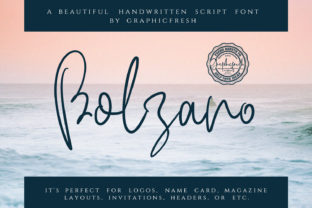
If you've ever scrolled past a wedding invitation, a boutique coffee shop sign, or a handmade candle label and thought, “That font feels so warm and inviting,” there’s a good chance Bolzano was at work. Bolzano is a beautifully light handwritten typeface—designed not to shout, but to connect. It doesn’t mimic calligraphy with rigid flourishes; instead, it captures the gentle rhythm of real pen-on-paper movement: soft entry strokes, airy spacing, and subtle variation in line weight that breathes life into every letter.
What Makes Bolzano Stand Out (Without Trying Too Hard)
Unlike many script fonts that lean heavily into ornate swirls or dramatic contrast, Bolzano keeps things approachable. Its lowercase letters flow with quiet confidence—no sharp angles, no forced drama. Uppercase characters are graceful but grounded, never overwhelming. The overall effect is elegant *and* easy to read, even at smaller sizes—something many handwritten fonts struggle with.
This balance is why designers and non-designers alike reach for Bolzano when they want authenticity without sacrificing clarity. It’s the kind of font that feels personal, like something you’d write yourself—but polished enough for professional use.
Where Bolzano Fits Naturally Into Real Projects
You don’t need design experience to get value from Bolzano. Think about the things you create or commission regularly:
- Small business branding — A local florist uses Bolzano on their Instagram story highlights and product tags to reinforce warmth and care.
- Educational materials — A teacher adds Bolzano headings to printable worksheets or classroom posters to soften academic tone and increase student engagement.
- Digital content — Bloggers use Bolzano for pull quotes or newsletter headers to break up dense text and add visual personality.
- Personal celebrations — Wedding planners recommend Bolzano for save-the-dates and menus because it feels intimate, not generic.
- Creative side projects — Hobbyists hand-letter journal covers or greeting cards using Bolzano as a base—then trace or layer over it for a hybrid analog-digital look.
It works especially well alongside clean sans-serifs (like Inter or Open Sans) or soft serif companions (think Lora or Merriweather). That contrast—light handwritten + structured typography—creates visual hierarchy without tension.
Why People Choose Bolzano Over Other Handwritten Fonts
Many users come to Bolzano after trying other scripts that felt either too stiff or too chaotic. Some fonts look lovely in isolation but vanish into the background when set in paragraphs. Others overwhelm body text or fail at web readability. Bolzano avoids those pitfalls by design.
Its lightness gives it versatility—it doesn’t dominate layouts, but it still commands attention where it matters. And because it’s carefully spaced and kerned, it scales gracefully across devices and formats. Whether you're exporting a PDF for print, embedding in a Shopify banner, or styling a Canva presentation, Bolzano holds its character without pixelating or losing nuance.
For beginners, this reliability matters. You won’t spend hours adjusting letter spacing or hunting down alternate glyphs just to make a headline feel right.
Practical Things to Keep in Mind Before Using Bolzano
Like any tool, Bolzano shines brightest when matched to the right task. Here are a few thoughtful considerations:
- Legibility at small sizes — While Bolzano reads well down to ~14px in digital contexts, avoid using it below 10pt in printed materials unless it's for decorative emphasis (e.g., a tiny tagline beneath a logo).
- Language support — Bolzano includes full Latin character sets (accents, diacritics, punctuation), making it suitable for English, Spanish, French, Italian, German, and more—but double-check if your project requires extended Cyrillic or Asian language coverage.
- Licensing clarity — Bolzano is available under standard desktop, web, and app licenses. If you're building a SaaS platform or distributing templates commercially, confirm which license tier applies. Most casual and small-business uses fall comfortably under the basic plan.
- Pairing intention — Because Bolzano has such a distinct voice, avoid pairing it with other expressive scripts. Let it be the sole “handwritten” element in your layout. Complement it instead with neutral, highly legible fonts for body copy and captions.
A Few Simple Ways to Start Using Bolzano Today
You don’t need fancy software to begin. Try these low-barrier ideas:
- Open Google Docs or Word and install Bolzano as a system font—then apply it to a heading in your next newsletter draft.
- In Canva, search “Bolzano” in the font menu (if already uploaded) and test it on a social media graphic—notice how it lifts even simple text blocks.
- Use it in email subject lines (via supported email platforms) to add warmth before someone even opens the message.
- Print a short quote in Bolzano, frame it, and hang it where you’ll see it daily—it’s a subtle reminder that good design supports mood and intention.
These aren’t “design hacks.” They’re everyday moments where Bolzano quietly does its job: making communication feel more human.
Final Thought: Bolzano Isn’t Just a Font—It’s a Tone Setter
Typography shapes how people feel before they even process the words. Bolzano invites calm, curiosity, and connection—not urgency or authority. That makes it ideal for anyone building trust: educators explaining new concepts, therapists crafting welcome emails, makers describing their craft process, or entrepreneurs sharing their “why.”
It won’t fix weak messaging or poor layout choices—but in the right context, Bolzano helps what you say land more gently, more memorably, and more authentically. And sometimes, that little shift in feeling is exactly what your audience needs.