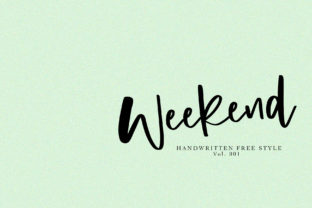
Weekend: A Fun, Relaxed Handwritten Font
Weekend isn’t just another script font—it’s a breath of fresh air in your design toolkit. Designed with loose, natural strokes and subtle irregularities, Weekend captures the warmth of hand-drawn lettering while staying clean and legible on screen and in print. It’s the kind of typeface that feels like a friendly note passed across a café table—casual, confident, and quietly memorable.
What Makes Weekend Stand Out
Unlike tightly kerned calligraphy fonts or overly polished brush scripts, Weekend leans into gentle imperfection. Its lowercase letters have soft entry and exit strokes, slight variations in weight, and a relaxed rhythm that mimics how people actually write when they’re not trying too hard. Uppercase characters keep a playful tilt without sacrificing readability. The overall effect is contemporary—not retro, not vintage, but unmistakably *now*, with a human pulse.
It works beautifully at larger sizes for headlines and quotes, but also holds up well in medium-scale applications like social media graphics or email headers. Because it’s not overly decorative, Weekend avoids visual clutter—even when paired with simpler sans-serif or serif fonts for body text.
Who Benefits Most From Using Weekend?
If you’re someone who values authenticity over polish—whether you're launching a small-batch candle brand, designing workshop handouts, or drafting a personal newsletter—you’ll find Weekend fits naturally into your voice. It resonates especially well with creators who want their visuals to feel inviting, not intimidating.
Bloggers use Weekend to highlight pull quotes or section dividers without shouting. Educators apply it to classroom posters or digital learning slides to soften academic tone and boost engagement. Small business owners choose it for packaging labels, website banners, or Instagram story templates where personality matters as much as clarity.
Real-Life Ways to Use Weekend
- Branding with warmth: A local bakery might use Weekend for its “Freshly Baked Daily” sign—keeping it approachable while standing out from generic fonts.
- Digital content: In Canva or Figma, Weekend adds charm to Instagram carousels, Pinterest pins, or email subject lines—especially when paired with open sans or Inter for supporting text.
- Printed materials: Wedding invitations, event flyers, or handmade product tags gain quiet elegance with Weekend’s handwritten ease—no need for expensive calligraphers.
- Educational tools: Teachers use it in printable worksheets or digital slide decks to make learning feel less formal and more conversational.
- Personal projects: Journal covers, habit trackers, or DIY greeting cards get an instant lift—Weekend makes even simple layouts feel intentional and cared for.
How It Fits Into Your Design Workflow
You don’t need advanced typography knowledge to use Weekend well. Start by asking: *What feeling do I want this piece to carry?* If the answer includes words like “friendly,” “light,” “creative,” or “unhurried,” Weekend is likely a strong candidate.
It pairs effortlessly with neutral typefaces—think Lato, Poppins, or Source Sans Pro—for contrast and balance. Avoid stacking it with other highly stylized scripts; simplicity lets Weekend shine. And because it’s designed with modern web standards in mind, it renders cleanly across devices—no pixelation or inconsistent spacing on mobile screens.
Things to Keep in Mind Before You Use It
While Weekend excels in expressive roles, it’s not ideal for long paragraphs or dense data tables. Its charm lives in brevity and emphasis—not endurance. For body copy, always pair it with a highly legible companion font.
Also consider context: a law firm’s official letterhead or a technical whitepaper may feel misaligned with Weekend’s laid-back energy. That doesn’t mean it’s “unprofessional”—just that tone and audience matter. Ask yourself whether your viewers will read the font as warm and trustworthy, or potentially unserious.
Lastly, licensing is straightforward but worth checking. Weekend is available through reputable foundries and subscription services like Adobe Fonts and Google Fonts (where applicable), so make sure your usage aligns with the license—especially if you’re embedding it in apps, merchandise, or client work.
Why It’s Worth Trying—Even If You’re New
You don’t need years of design experience to appreciate what Weekend brings to the table. It lowers the barrier between idea and execution. A hobbyist crafting a recipe blog can use it to title a “Weekend Brunch Special” post—and instantly communicate mood before the first sentence is read. A freelancer building a portfolio site can use it for their tagline and immediately signal creativity and approachability.
That’s the quiet power of thoughtful typography: it shapes perception before a single word is processed. Weekend does that without demanding attention—it invites it.
A Final Thought on Choosing Type With Intention
In a world full of templated designs and algorithm-driven aesthetics, choosing a font like Weekend is a small act of intentionality. It says you care about how something *feels*, not just how it looks. Whether you’re sketching ideas on paper or building a Shopify store, that human-centered mindset makes all the difference—not just for your audience, but for how you show up in your own work.
So go ahead—try Weekend in your next headline, your next email banner, your next printed menu. See how it changes the temperature of the page. You might be surprised how much personality one well-chosen font can add.