Kidplay: A Handwritten Font That Balances Whimsy and Professional Polish
When you're designing for impact—whether it's a children’s book cover, an inclusive education app, a boutique brand identity, or even a heartfelt wedding invitation—you need typography that communicates personality *and* purpose. Enter Kidplay: a handwritten font that feels delightfully playful at first glance but carries surprising versatility, legibility, and subtle sophistication. It’s not just “cute.” It’s intentionally crafted to bridge the gap between emotional resonance and functional clarity—making it a smart choice for designers and non-designers alike who want authenticity without sacrificing professionalism.
What Makes Kidplay Stand Out in a Crowded Font Landscape?
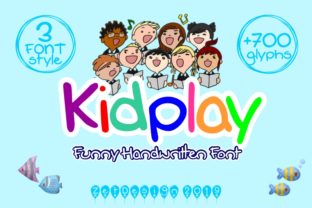
Kidplay is more than a decorative script—it’s a thoughtfully engineered typeface with organic rhythm, uneven baseline variation, and soft, rounded terminals that evoke hand-drawn charm. Unlike many whimsical fonts that sacrifice readability at small sizes or in UI contexts, Kidplay maintains strong character distinction—even in lowercase “a,” “e,” and “g.” Its “weird twist”? A gentle, intentional irregularity: some letters sit slightly higher or lower than others, mimicking natural handwriting without veering into chaotic illegibility. That controlled imperfection builds warmth and human connection—exactly what modern audiences respond to in branding, digital experiences, and printed materials.
Real Challenges Designers and Creators Face—And Where Kidplay Fits In
Many adults juggling creative projects face overlapping needs: they want designs that feel personal and joyful, yet remain accessible, inclusive, and scalable. Consider these common scenarios:
- Educators building classroom resources need fonts that engage young learners without triggering visual fatigue or dyslexic strain—especially in digital worksheets or interactive slides.
- Small business owners launching a new product line (think handmade toys, eco-friendly kids’ apparel, or sensory play kits) often lack design expertise but crave branding that feels genuine—not generic or overly corporate.
- UX writers and product designers working on family-focused apps (parenting tools, early literacy platforms, pediatric telehealth interfaces) must balance approachability with clarity and accessibility compliance.
- Content creators producing printables, social graphics, or newsletter headers want fast-to-implement visual personality—without hours spent customizing letterforms or licensing restrictions.
In each case, the goal isn’t just aesthetics—it’s trust-building, emotional alignment, and usability. That’s where Kidplay delivers quietly but effectively.
How Kidplay Solves Practical Problems—Without Compromise
Because Kidplay was designed with real-world application in mind, it avoids common pitfalls of playful fonts:
- Legibility across devices: Its open counters and generous x-height ensure readability down to 14px in web interfaces—ideal for buttons, labels, or captions in responsive layouts.
- Accessibility-aware contrast: While soft in tone, its stroke weight and spacing meet WCAG AA contrast ratios when paired with mid-tone backgrounds—no extra plugins or manual tweaks required.
- Effortless hierarchy: Use the regular weight for body text or friendly headings; pair with a clean sans-serif (like Inter or Lato) for supporting copy. The contrast feels intentional—not jarring.
- Licensing flexibility: Available under commercial-friendly licenses (including webfont and desktop bundles), Kidplay supports everything from Shopify store banners to PDF lesson plans—no surprise fees or attribution demands.
Practical Applications You Can Implement Today
You don’t need a design degree to use Kidplay well. Here’s how different users bring it to life:
Educators & Curriculum Developers
Use Kidplay for section headers in digital workbooks, flashcard titles, or classroom posters. Its friendly rhythm helps signal “safe space” and “learning invitation”—especially for neurodiverse students. Avoid using it for full paragraphs, but try it for activity instructions (“Draw your favorite animal!”) or reflection prompts (“What made you smile today?”).
Entrepreneurs & Brand Builders
Apply Kidplay selectively: logo wordmarks, product taglines, or email subject lines. For example, a wooden toy shop might use Kidplay for “Hand-carved with love” beneath a clean logotype—adding warmth without undermining credibility. Pair it with warm neutrals (oat, clay, sage) rather than high-contrast black-on-white for softer visual impact.
Digital Product Teams
In family-facing apps, reserve Kidplay for microcopy that benefits from empathy: success messages (“You did it! 🌟”), milestone badges, or onboarding tips. Never use it for navigation labels or error states—but it shines in celebratory, supportive moments where tone matters most.
Smart Considerations Before You Start Using Kidplay
Like any tool, Kidplay works best when matched to intent—not just aesthetics. Keep these in mind:
- Avoid overuse: One standout font per layout is enough. Too much whimsy dilutes focus and can unintentionally signal “not serious”—especially in healthcare or legal-adjacent contexts.
- Test with your audience: If your project serves children under age 7 or readers with low vision, run quick readability checks. Print a sample sentence at 12pt and ask a few people to read it aloud.
- Respect cultural context: While Kidplay uses standard Latin characters, avoid applying it to multilingual interfaces unless extended language support is confirmed (e.g., accented characters, diacritics).
- Optimize for performance: When embedding Kidplay on websites, serve only the weights and character sets you actually need—and always include a system font fallback (e.g.,
font-family: "Kidplay", cursive;) for graceful degradation.
Why Kidplay Fits the Future of Purpose-Driven Design
Today’s most effective design isn’t about chasing trends—it’s about aligning form with function, emotion with ethics, and expression with inclusion. Kidplay reflects that shift: it’s playful *because* it serves a purpose—to soften edges, invite participation, and humanize interfaces that too often feel cold or transactional. Whether you’re a solo creator launching your first Etsy shop or a seasoned designer refining a nonprofit’s visual voice, Kidplay offers a rare combination: instant charm, thoughtful structure, and quiet confidence.
So if your next project calls for warmth that doesn’t whisper “unprofessional,” joy that doesn’t shout “unserious,” or personality that doesn’t compromise clarity—Kidplay isn’t just an option. It’s a practical, empathetic, and surprisingly powerful solution.