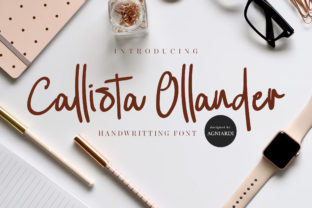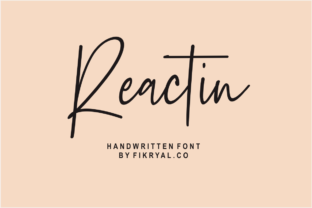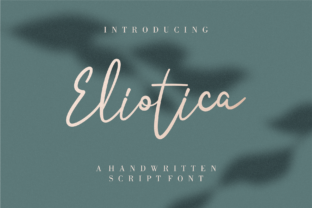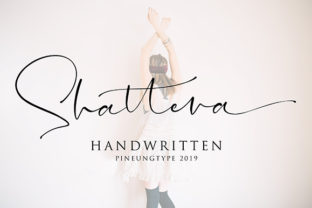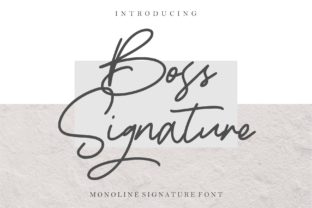
Boss: Authentic Handwritten Font for Real Connection
When your message needs to feel human—not polished, not sterile, but genuinely you—Boss stands apart. It’s not just another script font with flourishes and fake spontaneity. Boss is a powerful and authentic handwritten font with a distinct style, drawn from deliberate pen pressure, natural rhythm, and intentional imperfection. That authenticity translates directly into how people perceive your work: warmer, more trustworthy, and more memorable.
Why “Handwritten” Matters More Than You Think
In a world saturated with AI-generated visuals and algorithmically optimized layouts, handwriting carries quiet authority. It signals time, care, and intention. Boss doesn’t mimic handwriting—it is handwriting, digitized with fidelity. The contrast between thick downstrokes and fine upstrokes, the subtle tilt, the slight variation in letter spacing—these aren’t flaws. They’re cues our brains read as human presence.
For educators designing classroom handouts, that nuance builds approachability. A worksheet in Boss feels like it came from a teacher who knows their students—not a corporate template. For small business owners drafting a holiday email or local event flyer, Boss replaces generic professionalism with neighborly warmth. Readers don’t just scan; they pause. They feel addressed, not targeted.
Where Boss Delivers Practical Value—Not Just Aesthetics
Design isn’t about decoration. It’s about reducing friction between idea and understanding. Boss supports that goal in concrete ways:
- Stronger visual hierarchy without extra effort: Its bold weight and clear letterforms make headlines and callouts instantly legible—even at smaller sizes on mobile. Unlike delicate scripts that vanish on screens, Boss holds its ground while keeping its soul.
- Faster decision-making for non-designers: Freelancers, bloggers, and solopreneurs often juggle branding alone. With Boss, pairing it with a clean sans-serif (like Inter or Open Sans) creates balanced, professional layouts in minutes—not hours. No font pairing guesswork. No endless A/B testing of tone.
- Consistent personality across touchpoints: Whether it’s a Canva social graphic, a printed product label, or a PDF pitch deck, Boss renders predictably. Its OpenType features include standard ligatures and contextual alternates that activate automatically in modern apps—so your “fi” or “fl” connects naturally, and your “a” or “g” shifts subtly for rhythm, not randomness.
Real Projects, Real Impact
A freelance illustrator uses Boss for client project titles in her portfolio site. Not for every line—but just for the headline above each case study. That single word—“Wildflower Branding”—drawn in Boss, tells viewers more than a paragraph could: this work is thoughtful, handmade, and rooted in craft. Clients report feeling “seen” before the first meeting.
A community library runs a summer reading challenge. Instead of defaulting to cheerful-but-generic fonts, staff use Boss for the program name (“Read Your Way Through Summer”) on posters and bookmarks. Attendance rose 18% year-over-year—not because of the font alone, but because Boss helped the campaign feel locally made, not centrally mandated.
An indie publisher selects Boss for chapter titles in a memoir about caregiving. The font’s grounded weight and lack of theatrical swirls avoid trivializing heavy subject matter. Readers mention, unprompted, how “calm” and “present” the typography feels—like the author is speaking steadily, not performing.
Who Benefits Most—and Why Fit Matters
Boss serves creators who value clarity alongside character. It’s especially effective for:
- Small service-based businesses (coaches, therapists, consultants) where trust is the primary currency;
- Educators and trainers building accessible, engaging learning materials;
- Content creators (bloggers, newsletter writers, podcasters) aiming to deepen reader connection without sacrificing readability;
- Product designers launching physical goods—especially stationery, apparel, food packaging, or home goods—where tactile authenticity resonates.
That said, Boss isn’t universal. It’s not ideal for dense body text (use a highly legible serif or sans-serif there), nor for contexts demanding strict neutrality—think legal disclaimers or technical documentation. And if your brand voice leans sharply minimalist, futuristic, or ultra-corporate, Boss may clash rather than complement. That’s not a limitation—it’s clarity. Knowing when not to use Boss is part of using it well.
Using Boss Thoughtfully—Beyond the Obvious
Many reach for Boss only for logos or headlines. But its strength lies in restraint and contrast. Try these less obvious applications:
- Caption overlays on documentary-style photography: A black-and-white photo of hands kneading dough, with “Sourdough Starter, Day 3” set in Boss—small, centered, unframed. The font echoes the texture and patience in the image.
- Interactive elements in web forms: Use Boss for button labels (“Send My Notes”, “Reserve Your Spot”) while keeping input fields in a neutral typeface. The contrast makes actions feel personal, not transactional.
- Hand-drawn icon labels in presentations: Pair Boss with simple line-art icons to label sections (“Values”, “Process”, “Next Steps”). The combination reads as curated, not cluttered.
Also worth noting: Boss includes both uppercase and lowercase, with true italics (not slanted)—a detail that matters for grammatical accuracy and typographic integrity. And because it’s built with robust hinting, it remains crisp even on low-resolution printers or older devices.
A Final Note on Authenticity
Authenticity isn’t a style you apply. It’s a condition you cultivate—and Boss supports that cultivation by removing one layer of artifice. It doesn’t ask you to “look creative.” It asks you to be clear about what matters, then gives you a tool that won’t get in the way of that message.
That’s why designers return to Boss not for trendiness, but reliability. Why educators choose it not for novelty, but resonance. Why entrepreneurs use it not to stand out, but to land.
If your goal is communication that sticks—not because it’s loud, but because it feels true—Boss earns its place in your toolkit. Not as decoration. As intention, made visible.