Abacaga
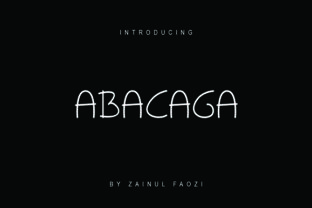
There’s a quiet magic in handwriting that no algorithm can fully replicate—imperfections, rhythm, personality, and warmth all bundled into a single stroke. Abacaga captures that magic with uncanny precision. It’s not just another handwritten font. It’s an equally weird and stunning typeface with a smart, intentional feel—like a thoughtful note passed across a café table, or the confident scrawl of a seasoned designer sketching ideas before refining them digitally.
What Makes Abacaga Stand Out?
At first glance, Abacaga feels familiar—organic, approachable, human. But look closer: its letterforms balance quirkiness with clarity. Letters tilt with subtle confidence. Swashes flow like breath—not forced, but purposeful. The baseline wobbles just enough to suggest authenticity, yet never so much that readability suffers. It’s this duality—weird yet grounded, expressive yet legible—that defines Abacaga.
Unlike many script fonts that prioritize flourish over function, Abacaga was designed with real-world use in mind. Its spacing is generous. Its lowercase ‘a’, ‘g’, and ‘y’ feature distinctive, memorable shapes—distinctive without being distracting. And crucially, it includes OpenType features like contextual alternates and ligatures, letting the font adapt naturally as you type, mimicking how a hand would vary strokes mid-sentence.
Who Benefits Most from Abacaga?
- Creatives & illustrators who want typography that complements hand-drawn assets—not compete with them.
- Small business owners launching a boutique brand, artisan product line, or local café—where warmth and individuality matter more than corporate polish.
- Content creators building Instagram carousels, Canva templates, or email headers that need to stand out in crowded feeds—without shouting.
- UX designers and developers integrating expressive typography into landing pages or microsites where tone and trust are built in seconds.
Where Abacaga Truly Shines (and Where It Doesn’t)
Abacaga excels in short-form, high-intent contexts. Think headlines, quotes, packaging tags, social bios, invitation suites, or hero section text. Its voice is strong enough to anchor a design—but gentle enough not to overwhelm supporting content.
It’s less suited for long paragraphs, body copy, or interfaces requiring rapid scanning (like legal disclaimers or multi-step forms). That’s not a flaw—it’s intentionality. Like choosing watercolor over Helvetica, you’re selecting Abacaga for what it communicates, not what it conveys efficiently.
Here’s how real users apply it:
- A ceramicist uses Abacaga for her “Hand-Thrown Since 2019” tagline on Etsy—pairing it with clean sans-serif body text. The contrast signals craft and care without sounding pretentious.
- A wellness coach overlays Abacaga on a soft-gradient Instagram story (“Breathe in. Begin again.”), creating instant emotional resonance—no stock imagery needed.
- A children’s book illustrator licenses Abacaga for chapter titles, letting the font’s playful curves echo the illustrations’ whimsy—while keeping body text highly legible for early readers.
- A sustainable fashion startup prints Abacaga on recycled cotton garment tags alongside minimalist icons—making sustainability feel personal, not procedural.
Practical Considerations Before You Use It
Before downloading or licensing Abacaga, ask yourself three questions:
- Is my message better heard—or felt—when it looks handwritten? If your goal is authority through austerity (e.g., financial reports, technical documentation), Abacaga may soften your intent unintentionally.
- Do I have control over how it renders? On some older email clients or low-res screens, fine details like thin upstrokes or delicate swashes may blur or disappear. Always test at multiple sizes and on actual devices.
- Does my audience associate “handwritten” with trust—or amateurism? In certain B2B or healthcare contexts, overly casual fonts can unintentionally undermine credibility. When in doubt, pair Abacaga with a strong, neutral secondary font to ground it.
How to Use Abacaga Thoughtfully (Not Just Decoratively)
Typography isn’t decoration—it’s communication infrastructure. Abacaga works best when it serves a narrative, not just aesthetics. Here’s how to honor its character:
- Limit it to one visual role per layout. Use it for headlines only—or for pull quotes—or for logo lockups—but avoid stacking it with other scripts or overly ornate fonts. Let it breathe.
- Respect its rhythm. Abacaga has natural pacing. Avoid tight tracking (letter-spacing) or excessive all-caps usage—both flatten its expressive energy.
- Pair it intentionally. A crisp, geometric sans-serif (like Inter or Poppins) creates compelling contrast. Avoid pairing it with other handwritten fonts—they’ll compete instead of complement.
- Use color sparingly but meaningfully. Try warm charcoal instead of pure black, or muted terracotta instead of bright red. Abacaga’s charm lives in subtlety—not saturation.
Abacaga Beyond the Screen
One often-overlooked strength? Abacaga translates beautifully to physical media. Its irregularities lend themselves to letterpress, foil stamping, and even embroidery. A wedding stationer told us she uses Abacaga for names on vellum envelopes—the slight variation between letters makes each envelope feel uniquely addressed, not mass-produced. Similarly, a craft brewery prints Abacaga on limited-edition bottle labels using soy-based ink on textured paper—the font’s organic nature echoes their brewing philosophy.
This cross-medium versatility isn’t accidental. Abacaga was drawn with analog tools first—then digitized with fidelity to those tactile origins. So whether viewed on a retina display or under gallery lighting, it retains its human signature.
Final Thoughts: Authenticity Isn’t a Style—It’s a Choice
In an age of AI-generated visuals and algorithmically optimized feeds, choosing Abacaga is quietly radical. It says: I value the trace of the hand. I choose imperfection as evidence of intention. I’d rather be remembered for feeling real than looking perfect.
That doesn’t mean it’s right for every project. But for the right moment—with the right audience and the right supporting design choices—Abacaga adds a touch of authenticity no template can replicate. It won’t solve your branding challenges alone. But paired with clear messaging, thoughtful hierarchy, and genuine voice? It becomes a quiet amplifier—elevating sincerity over slickness, connection over conformity.
If you’ve ever hesitated before clicking “purchase” on a font because it felt too safe—or too chaotic—Abacaga might be the middle path you didn’t know you were seeking. Not sterile. Not sloppy. Just human, thoughtfully rendered.
Explore Abacaga not as a trend, but as a tool—one that rewards patience, context, and care. Because the most memorable designs aren’t the loudest. They’re the ones that feel like they were made for you.