Jagan: A Serif Font That Brings Timeless Elegance to Modern Design
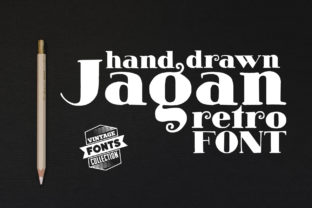
When you're crafting a brand identity, designing a book cover, or building a website that needs to stand out with quiet confidence, typography isn’t just decoration—it’s voice, tone, and intention made visible. Jagan is a stunning serif font with a distinct retro feel, carefully crafted to deliver warmth, authority, and character without sacrificing readability or versatility. It doesn’t shout; it resonates. And for professionals—designers, marketers, authors, and small business owners alike—Jagan offers a practical, elegant solution to a common creative challenge: how to look both classic and intentional in a world saturated with generic fonts.
Many adults working on real-world creative projects face subtle but persistent hurdles. You might be launching a boutique coffee shop and need packaging that feels artisanal—not trendy. Or perhaps you’re an independent author finalizing your novel’s interior layout and want body text that invites readers to linger, not skim. Maybe you're redesigning your portfolio site and realize the sleek sans-serifs you’ve used for years now feel emotionally distant. These aren’t just aesthetic preferences—they reflect deeper needs: trustworthiness, authenticity, memorability, and emotional resonance. Generic fonts often fail here because they lack personality or historical grounding. That’s where Jagan steps in—not as a novelty, but as a thoughtful tool aligned with human-centered design principles.
Jagan helps bridge the gap between nostalgia and modern usability. Its letterforms draw inspiration from mid-century typographic traditions—notice the gentle contrast in stroke weight, the slightly flared serifs, and the open apertures that improve legibility at smaller sizes. Unlike overly ornate retro fonts, Jagan avoids visual clutter. It’s optimized for both print and screen, supporting extended reading while retaining distinctive charm. Whether you’re setting a headline in 48pt or body copy in 16pt, Jagan maintains clarity and grace. That balance makes it unusually adaptable: a rare font that works equally well for a luxury skincare label, a literary magazine masthead, or a university lecture series poster.
Practically speaking, Jagan shines in contexts where credibility and warmth matter most. Consider these real-world applications:
- Editorial design: Use Jagan for article titles and pull quotes in digital newsletters or printed zines. Its rhythmic spacing and confident serifs guide the eye naturally, reinforcing narrative flow.
- Branding & packaging: Pair Jagan with a clean, neutral sans-serif (like Inter or Lato) for logos or product labels. The contrast communicates heritage and approachability—ideal for craft breweries, indie bookstores, or handmade goods.
- Web interfaces: Apply Jagan sparingly but purposefully—for hero section headlines, testimonial citations, or “About” page subheads. Its strong x-height ensures readability across devices, especially when paired with appropriate line height and contrast.
- Presentation decks: Replace overused system fonts in keynote slides with Jagan for title slides or key takeaways. It signals care and intentionality—subtly elevating how your ideas are perceived.
How you implement Jagan depends on your role and resources. A freelance designer might license it for client projects and build reusable style guides around its typographic hierarchy. A solopreneur launching an online course could use Jagan in Canva templates for certificates and email headers—no coding required. An educator preparing handouts might embed it in PDFs to reinforce professionalism and attention to detail. Importantly, Jagan doesn’t demand technical expertise to deliver impact. Its OpenType features—including ligatures and alternate characters—are accessible but optional; you get excellent results even with default settings.
Still, thoughtful implementation matters. Avoid pairing Jagan with other high-contrast serifs or overly decorative display fonts—that risks visual competition. Instead, lean into contrast: let Jagan anchor the composition while simpler fonts handle functional text. Also, consider licensing early. While some free alternatives mimic retro serifs, Jagan’s consistent spacing, extensive language support (including Latin Extended-A), and professional hinting make it worth the investment for any serious project. If budget is tight, start with a single weight (Regular or Medium) and expand as needed—many users find Jagan’s core weight handles 80% of their use cases beautifully.
What sets Jagan apart isn’t just how it looks—it’s how it performs in service of your goals. In an age where attention is scarce and authenticity is currency, choosing a font like Jagan signals that you value substance and continuity. It doesn’t chase algorithmic trends; instead, it supports long-term brand consistency, reader engagement, and emotional connection. For example, a local bookstore using Jagan on its window signage and event posters creates subconscious familiarity—customers begin to associate that refined yet welcoming rhythm with trust and curation. Similarly, a therapist’s website using Jagan in session descriptions conveys calm authority and human-centered care, far more effectively than a sterile tech font ever could.
Ultimately, Jagan meets people where they are: busy, discerning, and solution-oriented. You don’t need to be a typography expert to benefit from it—you just need a clear goal (e.g., “make my newsletter feel more personal,” “help my brand stand out in a crowded market,” “give my book the dignity it deserves”). Jagan answers those goals with quiet confidence. It’s not about adding flair for flair’s sake; it’s about removing friction between your message and the person receiving it. When your typography feels intentional, your audience feels seen.
If you’ve been relying on default fonts or settling for “good enough,” Jagan is a meaningful upgrade—one that pays dividends in perception, retention, and resonance. It’s the kind of detail that doesn’t scream for attention but lingers in memory: the serif that feels like a firm handshake, the typeface that says, “This matters—and so do you.”