Ciel Bleu: A Serif Font for Distinctive, Refined Typography
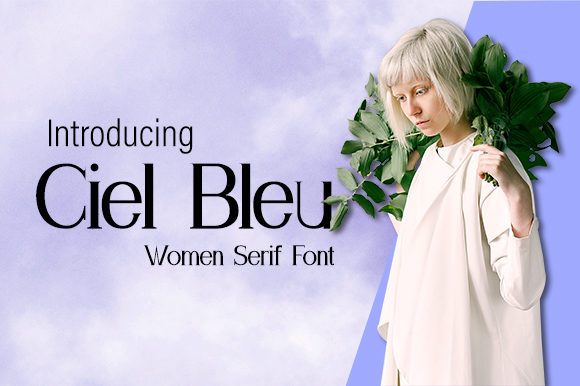
Ciel Bleu is a contemporary serif typeface designed with elegance, clarity, and subtle expressiveness in mind. It features gently modulated stroke contrast, open apertures, and carefully tuned proportions—characteristics that support both readability and visual distinction. Unlike high-contrast Didones or rigid transitional serifs, Ciel Bleu balances tradition with modern sensibility, making it suitable for contexts where authority and approachability coexist.
Designers and brands often seek typefaces that reinforce identity without overwhelming content. Ciel Bleu stands out in this regard—not through novelty alone, but through consistent, intentional craftsmanship. Its name evokes openness and calm (“Ciel” meaning sky in French, “Bleu” meaning blue), and the design reflects that tone: composed, breathable, and quietly confident.
Why Consider Ciel Bleu?
Readers evaluating typefaces typically weigh several factors: legibility across sizes and mediums, stylistic alignment with brand voice, licensing flexibility, and technical performance. Ciel Bleu addresses many of these considerations thoughtfully.
Its generous x-height and moderate contrast enhance legibility at smaller sizes—particularly useful for body text in editorial layouts, long-form web content, or printed collateral. At larger sizes, its refined terminals and balanced letterforms lend presence without stiffness. This duality makes it viable for both headlines and extended reading, reducing the need to pair multiple families for basic typographic hierarchy.
From a branding perspective, Ciel Bleu conveys sophistication without formality. It avoids the austerity of fonts like Bodoni or the historical weight of Garamond, occupying a middle ground that suits contemporary publishing, cultural institutions, boutique product packaging, and premium service providers.
Practical Benefits and Realistic Tradeoffs
One benefit of Ciel Bleu is its cohesive family structure. Most weights include matching italics with true cursive forms—not just slanted romans—which supports nuanced typographic expression. The range typically spans from Light to Bold, with optical sizing variants sometimes available for print use. This allows designers to maintain tonal consistency while adjusting visual weight meaningfully.
However, Ciel Bleu is not optimized for extreme environments. Its serifs and delicate details may soften or blur at very small sizes on low-resolution screens (e.g., under 14px on standard DPI displays). Similarly, its character set—while supporting Latin-based Western European languages—is generally not extended to cover Cyrillic, Greek, or extensive diacritic combinations. Users requiring broad linguistic support should verify glyph coverage before committing.
Licensing is another practical consideration. Ciel Bleu is typically distributed as a commercial font, meaning free use is restricted. While some foundries offer web font licenses with usage-based pricing or annual subscriptions, others require one-time purchases per platform (e.g., desktop vs. web). Designers working on client projects should confirm license scope—especially for embedded use in apps or SaaS platforms—before integrating it into production workflows.
When Ciel Bleu Fits Well
Ciel Bleu excels in contexts where tone and texture matter as much as function. It works effectively in:
- Editorial design: Magazines, literary journals, and long-form digital publications benefit from its rhythmic spacing and comfortable reading rhythm.
- Premium branding: Companies emphasizing craftsmanship, sustainability, or thoughtful design—such as independent publishers, artisanal goods, or architecture studios—find its quiet confidence aligns well with their messaging.
- Printed materials with high production value: Annual reports, exhibition catalogs, and stationery gain refinement from its crisp rendering in offset or high-DPI digital printing.
- Web interfaces prioritizing content depth: Portfolio sites, blogs, and institutional websites that foreground writing over interface elements can use Ciel Bleu to elevate textual hierarchy without sacrificing usability.
When Alternatives May Be More Appropriate
Ciel Bleu is not a universal solution. Situations calling for stronger functional emphasis or broader technical support may warrant alternatives.
For example, if a project requires extensive multilingual support—including Central/Eastern European, Turkish, or Baltic languages—fonts like Ideal Sans (with its companion serif Ideal Serif) or Charter offer wider language coverage and robust hinting for screen use.
Projects demanding strict accessibility compliance—especially those serving users with low vision—may benefit from fonts explicitly engineered for screen legibility, such as GOV.UK Transport or Source Serif Pro, which include enhanced spacing, clear punctuation, and tested WCAG-compliant contrast ratios.
Similarly, highly technical or data-dense applications—like dashboards, coding documentation, or financial reporting—often prioritize neutrality and scannability over expressive nuance. In those cases, a more restrained serif like Merriweather or a humanist sans like Inter may better serve functional goals.
Making an Informed Choice
Selecting a typeface involves balancing aesthetic intent with operational reality. To assess whether Ciel Bleu fits your needs, consider these questions:
- What is the primary medium? If most usage is web-based and includes small-body text, test Ciel Bleu at 16px and below on common devices—and compare rendering against system fonts or known screen-optimized serifs.
- What languages must be supported? Review the official character map or specimen PDF provided by the foundry. Don’t assume coverage beyond Western Latin unless confirmed.
- What are the deployment constraints? Check licensing terms for web font hosting, variable font support, and embedding permissions—especially if the project involves third-party platforms or offline distribution.
- How does it pair with existing elements? Try Ciel Bleu alongside your current color palette, imagery style, and interface components. Does it complement—or compete with—other visual priorities?
Finally, remember that typography serves communication first. Ciel Bleu’s strength lies in its ability to clarify and dignify text—not dominate it. When used with intention, it supports rather than distracts, reinforcing message integrity across formats.
If your goals emphasize subtlety, cohesion, and typographic maturity—and your technical and linguistic requirements align—you’ll likely find Ciel Bleu a reliable, expressive tool. If not, its distinct profile still offers useful contrast against other options, helping clarify what you truly need from a serif typeface.