Shadeerah Font Evaluation
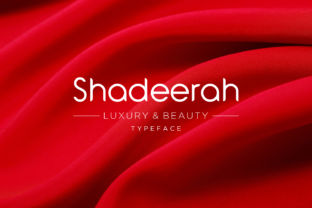
Shadeerah is a contemporary sans serif typeface designed with distinctive character and visual rhythm. It features subtle geometric foundations paired with soft, organic curves—particularly noticeable in letterforms like a, e, and s. Its design balances modern clarity with expressive warmth, making it stand out among more neutral or strictly functional sans serifs. Unlike highly optimized system fonts or ultra-legible UI typefaces, Shadeerah prioritizes personality and tonal nuance without sacrificing basic readability at medium to large sizes.
Why Designers Consider Shadeerah
Designers often explore Shadeerah when seeking a typeface that supports brand differentiation without relying on decorative elements or serifs. Its appeal lies in its ability to convey approachability and confidence simultaneously—qualities relevant for identity systems, editorial headers, packaging, and digital landing pages where first impressions matter. Because it avoids extreme contrast or exaggerated proportions, Shadeerah remains versatile across contexts while still offering visual distinction.
Interest in Shadeerah typically arises during phases of visual refinement: after selecting core brand colors or establishing layout structure, designers revisit typography to ensure voice alignment. It’s less commonly chosen for foundational UI text or dense long-form content—situations where legibility at small sizes and rendering consistency take priority—but gains traction when the goal is intentional emphasis, emotional resonance, or stylistic cohesion.
Practical Benefits and Realistic Expectations
One benefit of Shadeerah is its strong typographic presence at display sizes (24px and above). Its open counters, generous x-height, and carefully tuned spacing support clear recognition in headlines, logos, and hero sections. The font includes standard Latin characters, numerals, and basic punctuation, with support for common Western European languages. It performs reliably across modern browsers and design tools that support OpenType features.
However, expectations should be grounded. Shadeerah is not engineered for extended reading at small sizes—for example, body text under 16px may present challenges in low-resolution environments or on older devices. Its stylistic details, while appealing in controlled settings, can reduce scanning efficiency in complex interfaces or data-dense layouts. Additionally, it does not include extensive language coverage (e.g., Cyrillic, Greek, or extended diacritics), limiting use in multilingual projects unless supplemented.
Licensing is another practical consideration. Shadeerah is distributed under a commercial license, meaning usage in client work, products, or public-facing digital properties requires appropriate authorization. Free trials or demo versions are sometimes available but typically restrict export, embedding, or redistribution—important constraints for developers integrating fonts into web applications or SaaS platforms.
Situations Where Shadeerah Fits Well
Shadeerah works effectively in projects where tone and identity are central objectives. This includes:
- Brand identity systems — especially for lifestyle, creative, wellness, or boutique service brands aiming for warmth and authenticity without appearing overly casual.
- Editorial design — as a headline or section title font in magazines, newsletters, or digital publications with curated, image-forward layouts.
- Presentation decks and pitch materials — where visual impact and memorability support messaging clarity and audience engagement.
- Marketing assets — such as social media banners, email headers, or product launch campaigns where limited text and high visual attention make expressive typography advantageous.
In each case, Shadeerah functions best when used selectively—not as a full typographic system, but as a deliberate accent within a broader hierarchy. Pairing it with a neutral, highly legible sans serif (like Inter, Lato, or Source Sans) for body copy maintains balance and ensures functional performance where needed.
When Alternatives May Be More Appropriate
Shadeerah may be less suitable for projects demanding broad accessibility, technical precision, or scalability across diverse platforms. For instance:
- Web applications with dynamic content — where variable text length, user-resized displays, or assistive technologies require predictable spacing and consistent glyph rendering.
- Global or multilingual deployments — if supporting non-Latin scripts or extensive diacritical marks is essential, fonts like Noto Sans, IBM Plex Sans, or Roboto Flex offer wider language coverage and tested cross-platform behavior.
- High-volume, text-heavy interfaces — such as dashboards, documentation sites, or e-learning platforms, where rapid scanning and reduced cognitive load outweigh stylistic expression.
- Budget-constrained or time-sensitive initiatives — where licensing complexity, testing overhead, or lack of fallback options introduces unnecessary risk compared to freely licensed, widely supported alternatives.
Making an Informed Decision
Evaluating Shadeerah begins with clarifying project goals. Ask: Is distinctiveness more critical than universal legibility in this context? Does the intended audience respond positively to subtle expressiveness—or do they prioritize speed, familiarity, or neutrality? Review real-world usage examples—not just specimen images—to assess how Shadeerah behaves with your actual content, color palette, and layout constraints.
Testing is essential. Render Shadeerah alongside candidate alternatives using your target devices and browsers. Check contrast ratios against WCAG guidelines, verify line height and letter spacing adjustments, and observe how it scales across breakpoints. If embedding in web projects, measure performance impact: file size, render delay, and fallback behavior under network stress or legacy conditions.
Finally, consider long-term maintainability. Will future team members understand why Shadeerah was selected—and how to apply it consistently? Is there documented rationale for pairing choices and hierarchy rules? A well-justified choice supports continuity; an aesthetic preference alone may lead to inconsistent application over time.
Shadeerah offers value when its strengths align with specific communicative needs—not as a default, but as a considered tool. Its role is not to replace functional typography, but to complement it where intentionality and impression matter most.