Aldith: Where Timeless Typography Meets Modern Creative Confidence
Typography is no longer just about legibility—it’s about intention, identity, and intelligent design. In a landscape saturated with fleeting trends and algorithm-driven aesthetics, professionals across disciplines are gravitating toward typefaces that balance distinction with durability. Enter Aldith: a thoughtfully crafted font quartet designed not as a passing novelty, but as a foundational tool for creators who value clarity, cohesion, and quiet authority.
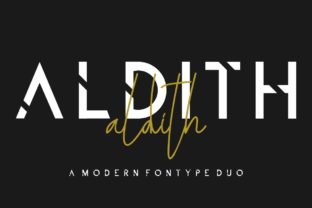
Aldith is more than a single font—it’s a unified family of four distinct yet harmonious versions: Aldith Serif, Aldith Sans, Aldith Display, and Aldith Mono. Each variant shares a common DNA—refined proportions, balanced stroke contrast, and subtle humanist warmth—but serves a precise functional role. This intentional quartet structure reflects a deeper shift in how designers, marketers, and product teams approach typography: not as isolated assets, but as interoperable systems built for real-world complexity.
Why Aldith Resonates Now—Beyond Aesthetics
The rise of Aldith aligns with several converging professional shifts. First, there’s the growing demand for design coherence at scale. Entrepreneurs launching DTC brands, agencies managing multi-platform campaigns, and SaaS teams building unified design systems all need fonts that perform consistently—from email headers to dashboard tables, from print brochures to mobile app interfaces. Aldith’s quartet model answers that need directly: one visual language, four optimized expressions.
Second, attention economies have reshaped expectations around readability and emotional resonance. Users scroll faster, skim deeper, and disengage instantly when tone feels mismatched or effortful. Aldith Serif, for instance, avoids the stiffness of traditional high-contrast serifs while retaining enough character to signal sophistication—ideal for editorial features, brand storytelling, or premium packaging. Meanwhile, Aldith Sans delivers neutrality without blandness: its open apertures and generous x-height ensure legibility on low-resolution screens and small viewports, making it equally effective in a Slack notification or a keynote slide.
Third, workflow efficiency is no longer optional—it’s strategic. Freelancers juggling five clients, in-house marketing teams iterating rapidly, or founders wearing multiple hats can’t afford font-hopping friction. With Aldith, pairing is intuitive, not experimental. Need a headline + body + code snippet? Aldith Display + Aldith Serif + Aldith Mono works seamlessly—no kerning overrides, no optical sizing guesswork. That predictability translates into saved hours, fewer revision cycles, and stronger internal alignment.
From Trend to Tool: How Aldith Fits Into Broader Creative Evolution
Look closely at today’s most respected brand identities—think Notion’s evolving UI language, The Economist’s restrained editorial hierarchy, or even emerging fintech platforms like Mercury—and you’ll notice a shared typographic ethos: clarity first, personality second, consistency always. These aren’t fonts chosen for novelty; they’re selected for endurance, scalability, and semantic precision. Aldith belongs squarely in this lineage—not as a reaction against digital excess, but as a considered response to its demands.
This mirrors broader technological developments. Variable fonts are gaining traction, yes—but adoption remains uneven due to browser support gaps, performance trade-offs, and limited design control in CMS environments. Aldith sidesteps those constraints by offering discrete, purpose-built weights and styles—each rigorously tested for rendering fidelity across devices, operating systems, and legacy platforms. It doesn’t chase technical novelty; it solves persistent problems.
Similarly, the rise of AI-assisted design tools has heightened awareness of typographic intentionality. When generative tools suggest “clean” or “professional” fonts, results often default to overused system fonts or generic sans-serifs lacking nuance. Designers increasingly seek alternatives that carry quiet confidence—not loud personality, but grounded presence. Aldith delivers that: its letterforms feel deliberate, not derivative; familiar, yet unmistakably its own.
Practical Applications Across Roles
Consider how Aldith functions in real workflows:
- For marketers: A campaign built in Aldith Sans (body) and Aldith Display (headlines) maintains tonal consistency across LinkedIn carousels, landing pages, and printed event signage—without needing custom spacing rules for each medium.
- For developers and product designers: Aldith Mono integrates cleanly into documentation sites and code editors, while sharing metrics and rhythm with Aldith Sans—reducing cognitive load when switching between writing specs and reviewing PR comments.
- For freelancers: Presenting a full branding package using only Aldith variants signals professionalism and system thinking—clients see cohesion, not compromise.
- For content creators: Newsletter headers set in Aldith Serif stand out in crowded inboxes without triggering spam filters’ “image-heavy” flags—text remains fully accessible, searchable, and responsive.
These aren’t hypothetical benefits. Teams report measurable improvements: faster client approvals, reduced cross-platform QA time, and higher engagement on text-dominant assets like long-form blog posts or whitepapers—where Aldith Serif’s gentle contrast and generous spacing reduce eye fatigue during sustained reading.
Shifting Expectations: Why “Smart Feel” Matters More Than Ever
The phrase “adds a smart feel to any design project” isn’t marketing fluff—it reflects an observable evolution in audience perception. Consumers and B2B buyers alike now interpret typographic choices as proxies for competence, reliability, and attention to detail. A poorly spaced heading, inconsistent weight usage, or mismatched serif/sans pairings subtly erode trust—even if viewers can’t articulate why.
Aldith addresses this by embedding intelligence into its architecture. Its optical sizing is baked into each variant—not as an afterthought, but as a core constraint during design. Its hinting is optimized for subpixel rendering on Windows, its OpenType features include contextual alternates for improved rhythm in running text, and its language support extends across Latin, Greek, and Cyrillic scripts without sacrificing aesthetic integrity.
This level of craft responds to rising expectations—not just from designers, but from end users who’ve grown accustomed to polished digital experiences. It also supports inclusivity goals: Aldith Sans meets WCAG 2.1 AA contrast standards at 16px and above, and its letterform distinctions (like the lowercase l vs. numeral 1) minimize misreading in accessibility-critical contexts like healthcare dashboards or financial disclosures.
Looking Ahead—Not Just Upgrading, But Aligning
Typography tools don’t exist in isolation. They reflect and shape how we communicate, collaborate, and build. As remote work normalizes asynchronous design reviews, as global teams collaborate across time zones and tools, and as brands strive for authenticity without artifice, the demand grows for type systems that are both human-centered and engineer-respectful.
Aldith meets that moment—not by promising disruption, but by delivering reliability with grace. It doesn’t ask designers to learn new paradigms; it empowers them to execute existing ones more confidently. It doesn’t replace judgment—it sharpens it.
That’s why professionals aren’t just adopting Aldith; they’re building around it. From pitch decks that land funding rounds to open-source documentation that attracts contributors, from Shopify themes that convert browsers to loyal customers to internal wikis that accelerate onboarding—Aldith is becoming the quiet backbone of work that matters.
In an era where speed often sacrifices substance, and automation sometimes dilutes intent, choosing Aldith is a small, deliberate act of alignment: between craft and clarity, between aesthetics and utility, between what looks right—and what works, consistently, across every touchpoint your audience encounters.
If your next project calls for typography that doesn’t shout, but settles in with quiet authority—explore Aldith not as a stylistic choice, but as a strategic foundation.